How to Handle a Commercial Roof Insurance Claim After a DFW Hailstorm
April 2026 · 9 min read
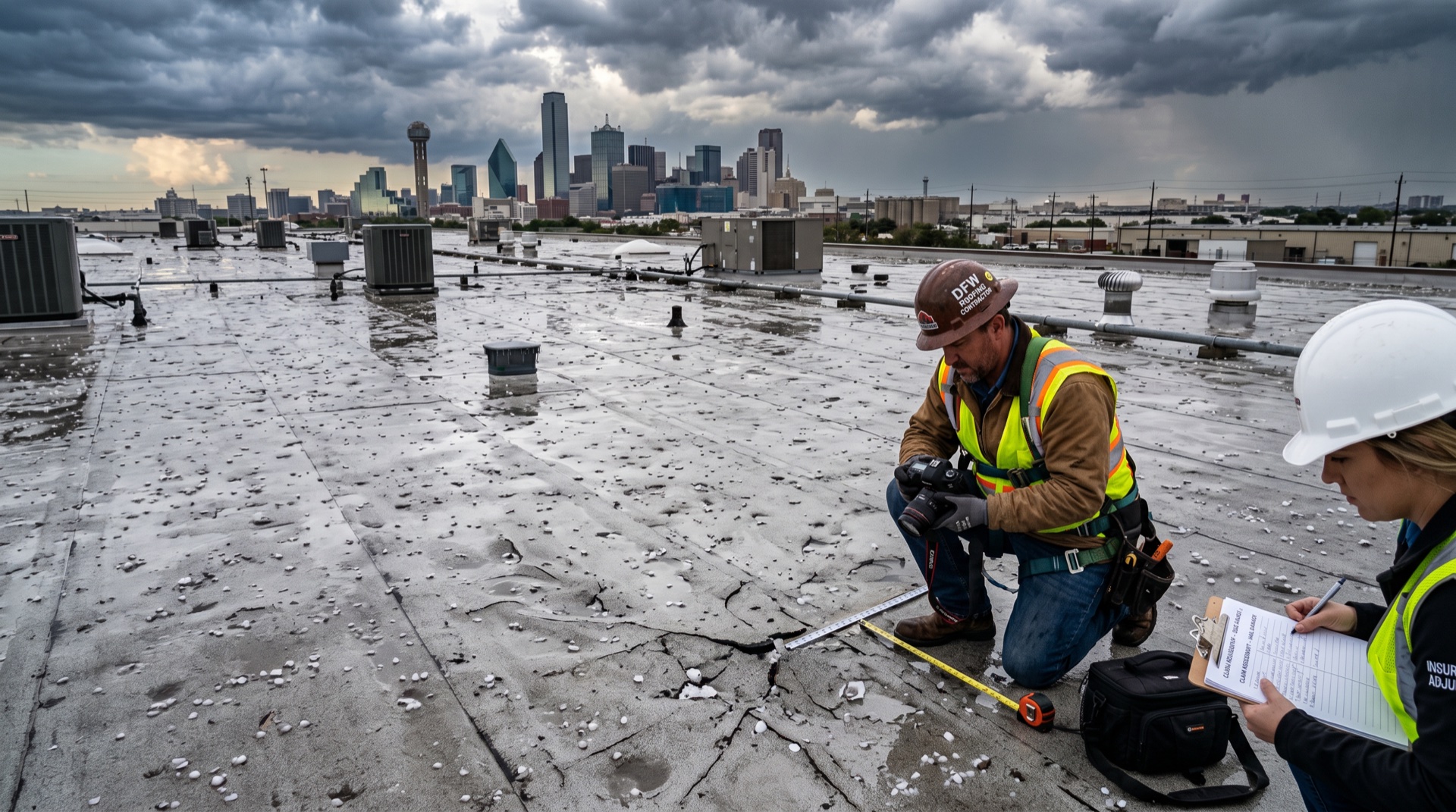
Dallas–Fort Worth is one of the most hail-prone metropolitan areas in the United States. Every spring and early summer, North Texas storm systems produce hail events that impact hundreds or thousands of commercial properties across the metroplex — from golf ball-sized stones that punch through membrane roofing to baseball-sized impacts that damage metal panels and HVAC equipment.
If your commercial property was hit by a hailstorm, acting quickly and systematically can make the difference between a smooth insurance claim and a costly dispute. Here's what to do.
Step 1: Prioritize Life Safety and Prevent Further Damage (First 24 Hours)
Before anything else, ensure the building is safe. If the storm caused structural damage, significant ponding water, or active roof collapse, restrict access and contact emergency services if necessary.
Once safety is confirmed, your primary obligation is to prevent further damage — most commercial property insurance policies include a "duty to mitigate" provision that requires you to take reasonable steps to prevent additional losses after a covered event. This typically means:
- Placing buckets or tarps under interior leaks
- Covering exposed roof areas with tarps to prevent water infiltration
- Documenting all emergency actions you take (photos, dates, costs)
Contact a licensed commercial roofing contractor for emergency tarping and temporary repairs. Keep all receipts — emergency mitigation costs are typically covered under your policy.
Step 2: Document Everything Before Any Work Begins
Do not allow anyone to make permanent repairs before your insurance adjuster has inspected the roof. This is critical. Premature repairs can make it impossible to document the full scope of damage, potentially limiting your claim.
Before your adjuster visit, thoroughly document the damage:
- Photograph and video the entire roof surface, focusing on impact marks, bruising, cracking, and punctures
- Document damage to rooftop equipment — HVAC units, skylights, exhausts, and metal flashing are all commonly damaged by hail
- Photograph interior damage — water stains on ceilings, damaged inventory or equipment, wet insulation
- Note the date and time of the storm event and obtain a weather report confirming hail size and location
Storm data services like NOAA storm reports or third-party hail mapping services can provide date-stamped hail size records for your specific address — extremely useful documentation if your insurer questions whether hail actually struck your property.
Step 3: File Your Claim Promptly
Contact your insurance carrier or broker to initiate the claim as soon as possible after the storm. Most commercial property policies have claim filing windows — while these are rarely as short as 30 days, delays in reporting can complicate the claim process if the insurer later questions whether damage occurred in the reported storm event or in a prior event.
When you file, provide:
- The date and approximate time of the storm
- A description of the damage you've observed
- Your documentation (photos, video)
- Your preferred contact information and availability for adjuster scheduling
Step 4: Have a Commercial Roofing Contractor Present During the Adjuster Inspection
This is the most important tactical step property owners can take. Your insurance adjuster works for your insurance company. A licensed commercial roofing contractor representing your interests can identify damage the adjuster might miss, document the scope of work required, and ensure the estimate reflects actual restoration costs — not lowball figures.
Request that your roofing contractor be present during the adjuster's roof inspection. A qualified contractor who works regularly with insurance claims will know what to look for, how to document it, and how to communicate effectively with adjusters about scope and pricing.
Step 5: Review the Adjuster's Estimate Carefully
After the adjuster visit, your insurer will provide a claim estimate — the amount they've calculated to restore your property. Review this carefully alongside your roofing contractor's estimate. Common discrepancies include:
- Missing damage items: Adjusters sometimes miss damage to rooftop HVAC units, flashings, gutters, and skylights that hail frequently damages
- Wrong material pricing: Material costs fluctuate, and adjuster pricing tools sometimes lag market rates — especially after a large regional storm event when demand spikes
- Inadequate scope: Some adjusters scope for repair rather than replacement when replacement is warranted given the extent of damage and membrane age
If there are significant discrepancies between the insurer's estimate and your contractor's documented scope, file a formal supplement with your contractor's documentation. Most commercial claims require at least one supplement review before settlement.
Step 6: Understand Actual Cash Value vs. Replacement Cost Value
Your policy likely covers damage on either an Actual Cash Value (ACV) or Replacement Cost Value (RCV) basis — this matters significantly for your out-of-pocket costs.
- ACV: The insurer pays the replacement cost minus depreciation. A 15-year-old TPO roof with a 20-year life expectancy might receive only 25% of its replacement cost under ACV coverage.
- RCV: The insurer pays the full cost to replace the damaged system with a like-kind equivalent. You typically receive ACV first, then a depreciation recovery payment after repairs are completed and documented.
Review your policy declarations page to confirm which basis applies. If you have RCV coverage, ensure you complete repairs within the required timeframe (typically 6–12 months from the date of loss) to collect the full replacement cost recovery.
DFW Commercial Roofing Can Help
DFW Commercial Roofing connects property owners with licensed, insured contractors who have extensive experience navigating commercial roof insurance claims in the North Texas market. Our contractor network understands the hail damage patterns common in DFW, the documentation insurance carriers require, and how to ensure property owners receive the full scope of coverage they're entitled to.
Storm Damage? Get a Free Assessment
Connect with a licensed commercial roofing contractor who can document your hail damage and work with your insurance adjuster for maximum claim coverage.
Ready to Protect Your Building?
Get a free estimate from DFW's most trusted commercial roofing specialists. We serve property owners and managers throughout the Dallas–Fort Worth metroplex.