Signs Your Commercial Roof Needs Immediate Attention
April 2026 · 7 min read
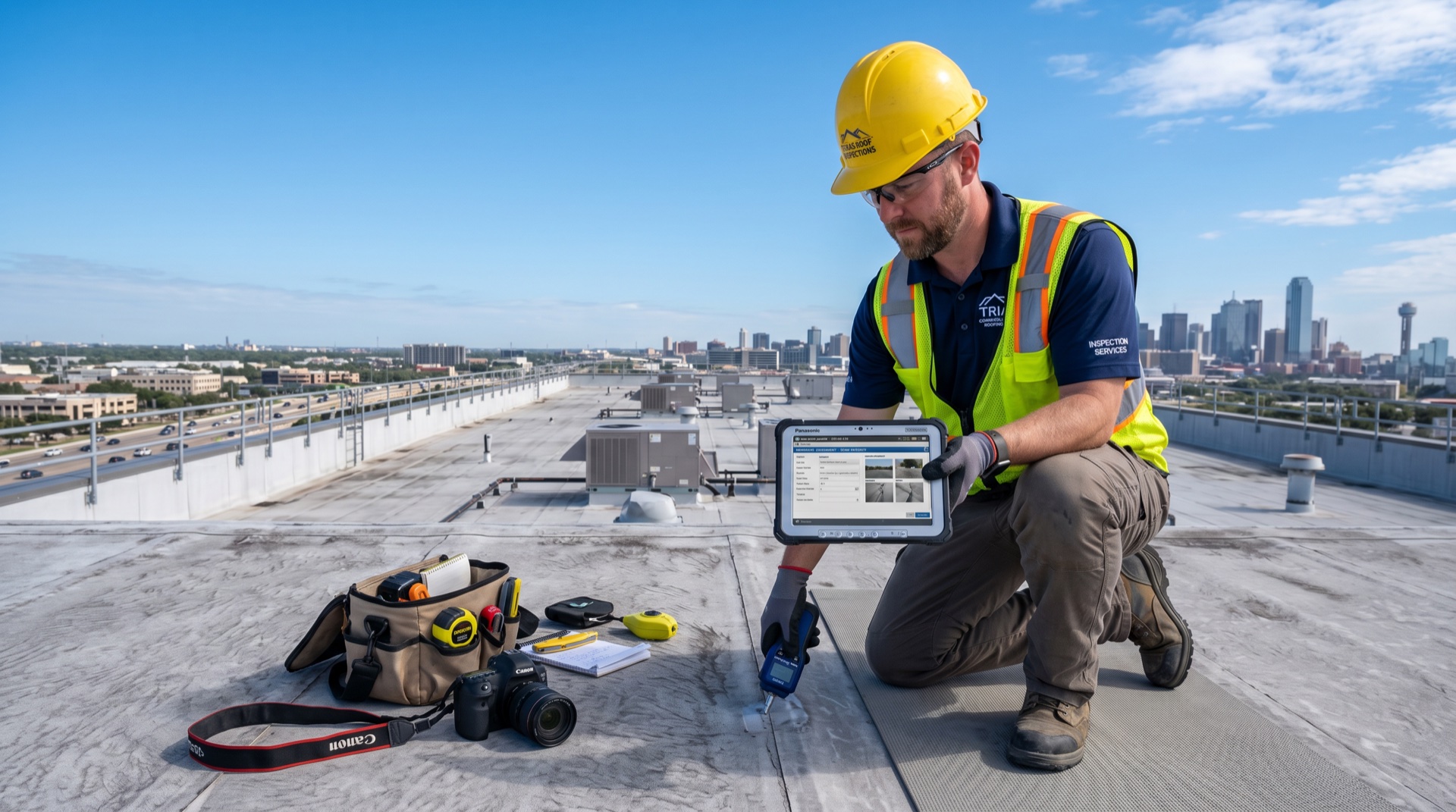
Commercial roofs rarely fail without warning. The problem is that the warning signs often occur where facility managers don't routinely look — on the roof surface itself, at penetrations and flashings, and inside attic or plenum spaces that don't get regular attention until there's an obvious interior leak.
By the time water is dripping through a ceiling tile, the underlying membrane failure has usually been developing for weeks or months. Here's what to watch for — and what to do when you see it.
1. Active Leaks or Water Stains Inside the Building
This is the most obvious sign, but it's worth emphasizing: water stains on ceiling tiles, walls, or around light fixtures always indicate a roofing problem — even if the stain is dry when you find it. Water can travel significant distances from the point of entry to where it becomes visible inside the building, which means the actual roof failure may be far from where the interior stain appears.
Don't wait to address active leaks. Water infiltration in commercial buildings causes damage that escalates quickly — soaking insulation (which loses its thermal value and becomes a mold risk), damaging ceiling systems and interior finishes, and potentially reaching electrical equipment.
What to do: Contact a commercial roofing contractor for an emergency inspection. Protect interior contents and document everything for potential insurance claims.
2. Membrane Blistering or Bubbling
Blisters in a single-ply membrane (TPO or EPDM) appear as raised bubbles or lumps in the membrane surface. They're caused by moisture vapor becoming trapped between the membrane and the insulation below, or between membrane layers, and then expanding in the heat — North Texas summers are particularly effective at accelerating this process.
Small blisters that haven't ruptured may be monitored for a season with scheduled contractor check-ins. Large blisters, or any blister that has popped or shows membrane cracking, require prompt repair. A ruptured blister leaves the underlying insulation and decking exposed to direct water intrusion.
3. Ponding Water More Than 48 Hours After Rain
Commercial flat and low-slope roofs are designed to drain. Water that remains pooled on the roof surface more than 48 hours after rain indicates a drainage problem — clogged drains or scuppers, inadequate slope, or structural deflection that has created low spots over time.
Chronic ponding accelerates membrane deterioration, increases the roof's structural load (water weighs approximately 5 pounds per square foot per inch of depth), and creates conditions that foster algae and vegetation growth at membrane seams. It also significantly increases the risk of roof collapse during heavy rain events if the drainage issue isn't addressed.
4. Visible Seam or Flashing Failure
Seams and flashings are the most common failure points in any commercial roofing system. Flashings — the metal or membrane material that seals roof penetrations like HVAC curbs, pipes, skylights, and parapet walls — are subject to constant thermal cycling stress and are the first area to fail in aging systems.
Signs of flashing failure include:
- Separation between the flashing and the adjacent surface
- Visible cracks or tears in membrane at penetrations
- Rust staining from corroding metal flashings
- Caulk that is cracked, shrinking, or separating from the substrate
Most flashing failures can be repaired cost-effectively if caught early. Left unaddressed, they become entry points for sustained water infiltration that can damage insulation, decking, and structure.
5. Membrane Shrinkage or Splitting
EPDM membranes in particular are prone to shrinkage over time, especially at flashings and penetrations where the membrane is mechanically stressed. A shrinking EPDM membrane will pull away from flashings and base terminations, eventually creating open gaps. TPO membranes can split at seams if the heat-welding was inadequate or if the membrane has aged to a point where it's become brittle.
Significant membrane shrinkage or splitting is typically an indicator that the roof system is approaching end of life and should be evaluated for full replacement rather than repeated spot repairs.
6. Significantly Elevated Interior Energy Costs
Commercial roofing insulation degradation — particularly when insulation becomes wet — can meaningfully increase a building's cooling load. If your energy bills have climbed without an obvious operational explanation, degraded or wet roof insulation may be contributing. Wet insulation also retains moisture and becomes a long-term mold risk even after the original leak is repaired.
A roofing contractor with infrared scanning capability can map wet insulation under an existing membrane without destructive investigation — allowing targeted repairs rather than full replacement in many cases.
7. Age of the Existing System
Even with no visible damage, a commercial roofing system approaching the end of its expected service life warrants a professional assessment. Typical commercial membrane lifespans in DFW conditions:
- TPO (standard 45 mil): 15–20 years
- TPO (heavy-duty 80 mil): 20–25 years
- EPDM: 20–30 years with proper maintenance
- Standing-seam metal: 40–70 years
- Built-up roofing (BUR): 15–25 years
A roof within 3–5 years of its expected service life should be inspected annually and its remaining useful life actively managed — including evaluating whether a roof coating can extend its life or whether replacement planning should begin.
Schedule a Professional Inspection
Most commercial roofing contractors recommend biannual professional inspections — spring (before storm season) and fall (after). A licensed contractor can identify developing issues before they become emergencies, provide written documentation for insurance records, and help you budget intelligently for maintenance and eventual replacement.
DFW Commercial Roofing connects property owners with licensed, insured commercial roofing contractors throughout the Dallas–Fort Worth metroplex for inspections, repairs, and replacement projects. Free estimates available.
Get a Professional Roof Inspection
Don't wait for an active leak. Connect with a licensed commercial roofing contractor for a professional assessment of your DFW property's roof condition.
Ready to Protect Your Building?
Get a free estimate from DFW's most trusted commercial roofing specialists. We serve property owners and managers throughout the Dallas–Fort Worth metroplex.