TPO vs. EPDM vs. Metal: Choosing the Right Commercial Roof for Your DFW Building
May 2026 · 10 min read
Choosing a commercial roofing system is one of the most significant long-term decisions a DFW property owner or facility manager will make. The right choice depends on your building type, roof slope, budget, and priorities — whether that's upfront cost, long-term durability, energy performance, or warranty protection.
Three systems dominate the commercial roofing market in Dallas–Fort Worth: TPO (thermoplastic polyolefin), EPDM (ethylene propylene diene monomer), and metal roofing. Each has genuine strengths and real trade-offs. Here's what you need to know before making a decision.
TPO Roofing: The DFW Workhorse
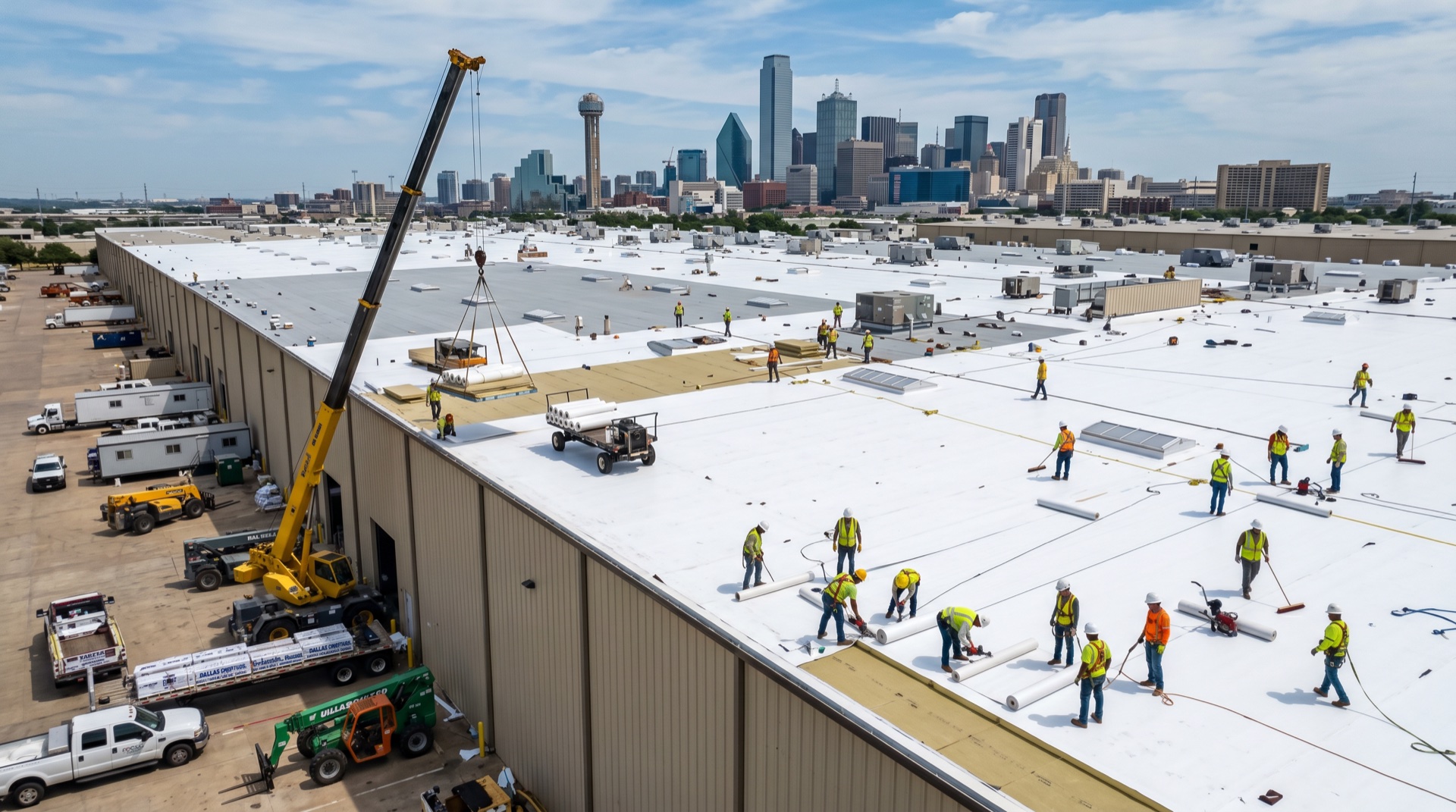
Thermoplastic polyolefin has become the most commonly installed commercial roofing membrane in the DFW metroplex over the past decade, and for good reason. TPO's white reflective surface performs exceptionally well in the Texas heat — reducing cooling loads by reflecting solar radiation rather than absorbing it. In a market where summer temperatures regularly exceed 100°F, this energy performance advantage is significant.
TPO is installed as a single-ply membrane, typically 45, 60, or 80 mil thick, heat-welded at seams to create a monolithic, watertight surface. The heat-welded seams are one of TPO's key advantages over EPDM — properly executed TPO welds are as strong as or stronger than the membrane itself, making seam failure far less common than with adhesive-bonded EPDM systems.
TPO is typically the best choice for:
- Low-slope commercial roofs (less than 2:12 pitch)
- Properties where energy performance and reduced cooling costs are priorities
- New construction and full replacements where manufacturer warranty coverage is important
- Buildings in high-hail-risk areas (thicker TPO membranes offer meaningful impact resistance)
Realistic cost range: $6–$12 per square foot installed, depending on membrane thickness, fastening method, and roof complexity.
EPDM Roofing: Proven Performance Over Decades
EPDM — the black rubber membrane that's been installed on commercial roofs since the 1960s — has a performance track record no newer system can match. Properly installed EPDM on a well-maintained building can last 30+ years, and its flexibility at low temperatures makes it particularly resistant to the thermal cycling that causes other membranes to crack and fail over time.
The primary knock on EPDM is its dark color. Traditional black EPDM absorbs heat rather than reflecting it, which translates to higher cooling costs compared to white TPO — a meaningful disadvantage in the North Texas climate. White and light-colored EPDM membranes are available and address this to some extent, but they remain more expensive than standard black EPDM.
EPDM is typically installed with adhesive-bonded or fully adhered systems, and seam integrity is a key maintenance consideration. Unlike TPO's heat-welded seams, EPDM seams rely on adhesives that can degrade over time and require periodic inspection and maintenance.
EPDM is typically the best choice for:
- Retrofit applications over existing insulation where the building's structure limits weight capacity
- Properties with complex roof geometry where EPDM's flexibility simplifies installation
- Long-term holds where proven longevity matters more than upfront cost optimization
- Cold-climate applications (EPDM outperforms TPO at very low temperatures — relevant for DFW cold snaps)
Realistic cost range: $5–$10 per square foot installed, with fully adhered systems at the higher end.
Metal Roofing: Premium Longevity with the Highest Upfront Cost
Standing-seam metal roofing represents the highest-end option for most commercial applications — and delivers the highest long-term performance when properly installed. A well-maintained metal roof can last 40–70 years, and its resistance to hail (with appropriate gauge and panel design), fire, and wind makes it particularly well-suited to the DFW climate's severe weather risks.
Commercial metal roofing is available in Galvalume steel, aluminum, and various coated steel systems. Standing-seam metal roofing — where the seams are raised above the panel surface — is the dominant system for commercial applications because it allows for thermal expansion and contraction without stressing the seam joints.
The primary limitation of metal roofing is cost. At $12–$25+ per square foot installed for standing-seam commercial systems, metal roofing carries a significant upfront premium over TPO or EPDM. However, when modeled over a 40-year lifecycle, the math often favors metal — particularly when avoiding 1–2 full replacements of a single-ply membrane system over the same period.
Metal roofing is typically the best choice for:
- Long-term holds where lifecycle cost matters more than upfront investment
- Properties in high-hail-risk areas (properly specified metal is the most durable option)
- Sloped roofs (metal performs exceptionally well on slopes that are not ideal for membrane systems)
- Buildings where fire resistance, curb appeal, or branding considerations are factors
Realistic cost range: $12–$25+ per square foot installed for commercial standing-seam systems.
How to Choose: The DFW Decision Framework
For most standard commercial properties in the DFW metroplex — flat or low-slope roofs on office, retail, industrial, or healthcare buildings — TPO is typically the starting point. It offers strong energy performance in the Texas heat, a heat-welded seam system that outperforms adhesive-based EPDM, competitive pricing, and broad manufacturer warranty availability.
Choose EPDM when your building's structure, existing insulation, or roof complexity makes it a more practical choice, or when you have a specific reason to value EPDM's proven longevity track record over TPO's more recent market dominance.
Choose metal when you're making a long-term investment decision, when your building has significant slope, when hail risk is a top concern, or when the application demands a premium system.
The right answer also depends significantly on which manufacturer and contractor you work with. A well-installed TPO system from a reputable manufacturer will outperform a poorly installed metal roof every time. Manufacturer certification and contractor experience matter as much as the system selection itself.
Get a Professional Assessment
The best way to determine the right system for your DFW building is to have a licensed, manufacturer-certified commercial roofing contractor assess your specific property — roof slope, existing system condition, insulation, drainage, and structural considerations all factor into the recommendation. DFW Commercial Roofing connects property owners with qualified contractors who can provide a no-cost assessment and written estimate for each system option.
Get a Free Commercial Roofing Estimate
Contact us to be connected with a licensed, manufacturer-certified commercial roofing contractor for a no-obligation assessment of your DFW property.
Ready to Protect Your Building?
Get a free estimate from DFW's most trusted commercial roofing specialists. We serve property owners and managers throughout the Dallas–Fort Worth metroplex.